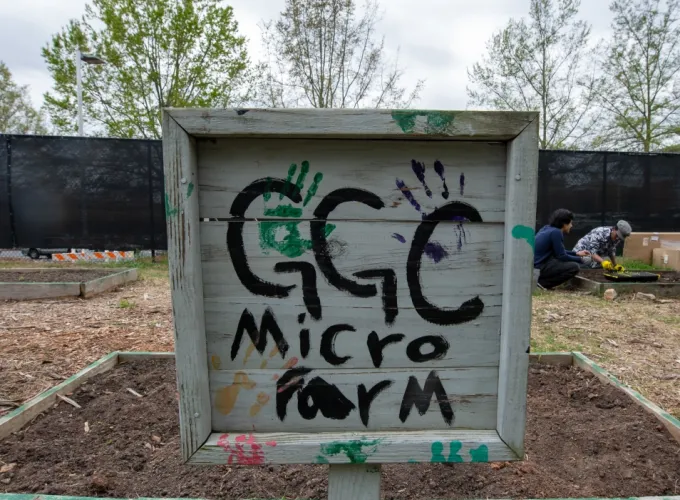

Beyond the Georgia Gwinnett College (GGC) hallways, a space exists where learning takes root in a different way. The GGC microfarm offers students, faculty and staff the opportunity to experiment, build skills and cultivate food and community.
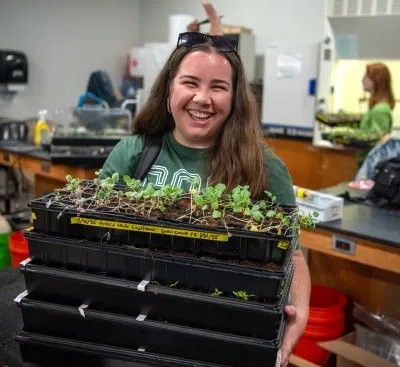
Established in 2013 and located next to the GGC Convocation Center, with its laboratory in Building A, Room 1310, the microfarm serves as a hands-on learning environment centered on sustainable practices. Participants move beyond theory, applying classroom knowledge to grow food and understand the systems that sustain it.
“This is especially helpful when students take what they learn at the microfarm about watering and proper plant care and start a mini garden at home,” said Zoe Carpenter, a film student graduating in 2028. “Sharing tips on how to save money, plant herbs and compost properly is unbelievably useful information.”
From exploring soil composition using reusable campus waste to harvesting crops, the microfarm provides a full-circle learning experience. Dr. Ramata Cisse, assistant professor of biology for anatomy and physiology and manager of the microfarm, describes it as an “experimental station,” where learning, sustainability and tangible results come together.
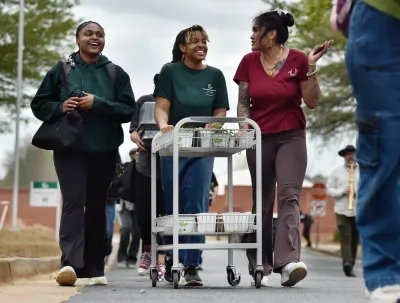
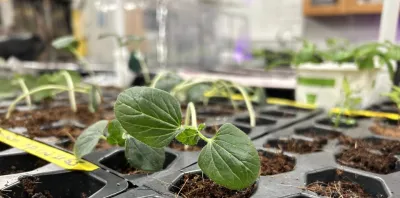
The growing process begins indoors, where seedlings are carefully nurtured before being transplanted into outdoor planting beds. That transition took place March 30 during the “Proliferative Planting Party: From Lab to Land,” an event that blended science with community engagement and marked the start of the crops’ journey toward harvest.
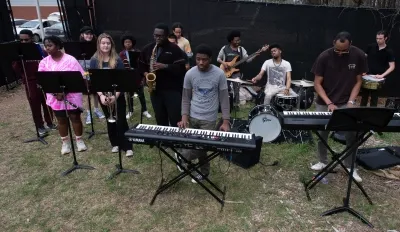
This year’s planting party brought together students, faculty and staff in a collaborative effort. Accompanied by live jazz, volunteers worked side by side, reinforcing the microfarm’s role as more than a learning site. It is also a place where relationships and shared purpose can grow.
“Activities like this help you meet like-minded individuals who share the same passions, even outside of an environmental major,” said Ammon Rodriguez, a pre-engineering student graduating in 2027.
Today, the microfarm supplies select produce served on campus in the Dining Hall and the GGC Care Pantry. Participants can also take home what they grow. Beyond food production, the microfarm cultivates attention to detail — from choosing the right crops for each season to understanding proper planting techniques.
The variety of crops reflects the diversity of the community itself. Kale, cabbage peppers, tomatoes, cucumbers and flowers grow together, creating opportunities for exploration and cultural connection through agriculture.
With approximately 38 planting beds available for adoption, the microfarm welcomes participation from every Grizzly. Whether the goal is to start a new hobby, gain hands-on experience or connect with others, there is a space to grow.
As its impact expands, so does its physical footprint. Construction is underway near Building D, with plans for a redesigned microfarm by 2027 that will feature study areas, green spaces and new opportunities for engagement.
Participants often describe the experience as both educational and meaningful noting the sense of connection it creates beyond the classroom.
To learn more or to get involved at the microfarm, rcisse [at] ggc.edu (email Cisse) or visit the microfarm’s GivePulse page.
By Laura Moscoso, internal communications student assistant