
Environmental Health and Safety

Life Threatening Emergency?
*Please do not email or text for emergency assistance.
About
Environmental Health and Safety (EHS) promotes a culture of safety and environmental stewardship at GGC through education, training, risk assessment, incident prevention and continuous improvement. The knowledgeable EHS team also ensures compliance with federal, state and local regulations.
Policies and Procedures
EHS programs and policies establish required training, equipment and work practices to manage campus risks and ensure regulatory compliance. Developed in collaboration with campus stakeholders and aligned with University System of Georgia requirements, these policies must be followed by faculty, staff and students when applicable.
USG and GGC Environmental Health and Safety Policy

Safety Training and Events
EHS offers workplace safety training and emergency management training, including lifesaving CPR certification, automated external defibrillator (AED) instruction and more.
The college also hosts an annual campuswide safety fair featuring local fire and police department demonstrations, along with interactive activities, such as practicing fire extinguisher use and experiencing the effects of alcohol impairment through simulation goggles.
Environmental Programs
Sustainability Initiatives
- Library Gold LEED certification
- Student Center Silver LEED certification
- Donald K. Balfour II Health & Sciences Building (Building H) Georgia Peach Green Building Rating System recognition
- Water bottle refill stations
- GrizzBee apiary and research initiative
- Energy conservation
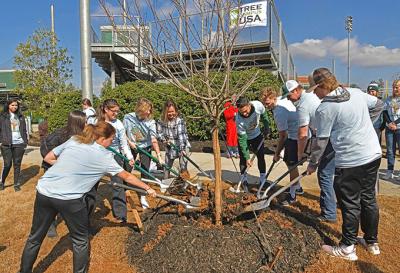
- Tree Campus USA
Outdoor Air Quality Program
GGC’s Outdoor Air Quality Program ensures compliance with applicable federal and state air quality regulations, including Title V of the Clean Air Act. The program includes an evaluation of the campus’s potential to emit (PTE) regulated air pollutants to determine permitting and reporting obligations. The PTE assessment is reviewed and updated regularly and whenever new emission sources are installed or modified on campus to ensure continued regulatory compliance.
Additionally, local air quality is monitored, and the campus community is notified through several routes of communication when local air quality is compromised.
Hazardous Waste Management
GGC has a comprehensive Hazardous Waste Management, Minimization and Disposal Program committed to meeting all federal, state and local regulations.
Hazardous waste is any material that exhibits hazardous characteristics, is unusable or unwanted in anyway and poses a potential hazard to individuals, the environment or public health. GGC is committed to the safety and health of all members of the college community, the public and the environment.
The improper disposal of hazardous materials is strictly forbidden. Detailed information and assistance on hazardous waste disposal is provided by EHS and individual departments generating hazardous waste.
Hazardous Waste Management Plan
Surface Water Conservation
Surface water conservation at GGC is managed through a combination of planning, infrastructure, operations and education, and coordinated by Facilities, Operations and EHS. Common approaches used at GGC include:
- Stormwater management and runoff control
- Regulatory compliance
- Pollution prevention and best management practices
- Governance and campus wide coordination
Laboratory Safety
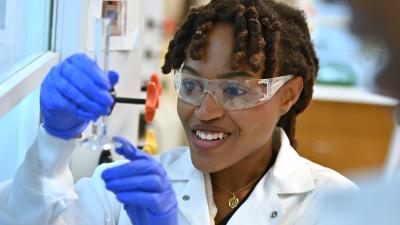
Safety in GGC laboratories and classrooms is a shared responsibility. The laboratory safety program promotes a collaborative approach to identify and manage a wide range of campus hazards, including chemical, biological, radiological, mechanical and physical risks. By understanding associated hazards, minimizing risks where possible, and remaining aware of those that cannot be eliminated, the GGC community works together to support a safe environment for teaching, learning and operations.
Occupational Safety and Health
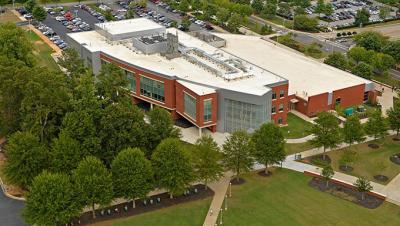
GGC's Occupational Safety and Health Program promotes a safe and healthy work environment for faculty, staff, students and visitors. The program focuses on hazard identification, risk reduction, regulatory compliance, and safety education across campus operations and academic activities. Through training, inspections and collaboration with campus partners, EHS works to prevent injuries and illnesses while supporting the college’s mission and operational goals.
Campus Optics is used as the GGC centralized EHS management system to support reporting, tracking and continuous improvement of campus safety programs. The platform is used to document incidents and near misses, conduct inspections and audits, manage corrective actions, and support compliance and training efforts. Campus Optics helps GGC proactively identify risks, improve communication, and maintain a safe and healthy campus environment.
Email envirohealthsafety [at] ggc.edu (envirohealthsafety[at]ggc[dot]edu) to inquire about workplace safety training.
Emergency Management
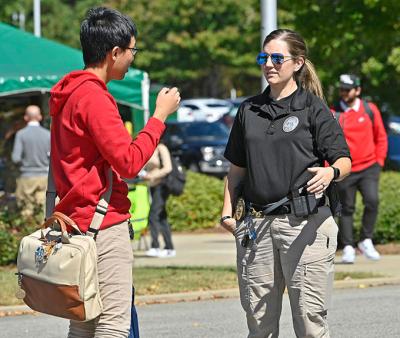
GGC's Emergency Preparedness and Management Program, administered through EHS, coordinates campus-wide planning, response and recovery efforts for emergencies and disasters.
The program develops emergency action plans, supports training and exercises, and works closely with campus partners and external responders to enhance readiness. Through proactive planning and continuous improvement, EHS helps protect life, property and continuity of operations.
Email envirohealthsafety [at] ggc.edu (envirohealthsafety[at]ggc[dot]edu) to inquire about GGC employee emergency management safety training.
Find tips to prepare yourself in an emergency.
Safety in the Arts

Visual arts studios present a range of health and safety hazards, including chemical exposures from paints, solvents, resins and glazes; inhalation risks from dusts; fumes from welding and casting; and physical hazards from tools, kilns and equipment. These exposures can cause skin and respiratory irritation, neurological effects, heavy metal toxicity and long-term lung disease if not properly controlled.
Effective EHS oversight is essential. Faculty and staff must model safe work practices, select safer materials and ensure students are trained, while EHS professionals provide risk assessments, ventilation guidance, regulatory compliance support and hazardous waste management. Strong collaboration ensures creative work occurs in a safe and compliant environment.
Contact Us
Contact us

Environmental Health and Safety

Connect